Zara Ludwig · 17 September 2026
Linking Atmospheric Conditions to Variations in Portable Biometric Reader Performance
Portable biometric readers track heart rate, oxygen saturation, blood pressure, and other physiological metrics across outdoor and indoor settings, yet their output shifts when temperature, humidity, barometric pressure, and altitude change. Engineers and field researchers have documented these shifts through controlled tests and real-world deployments, showing measurable impacts on sensor accuracy and signal stability.
Temperature Ranges and Sensor Drift
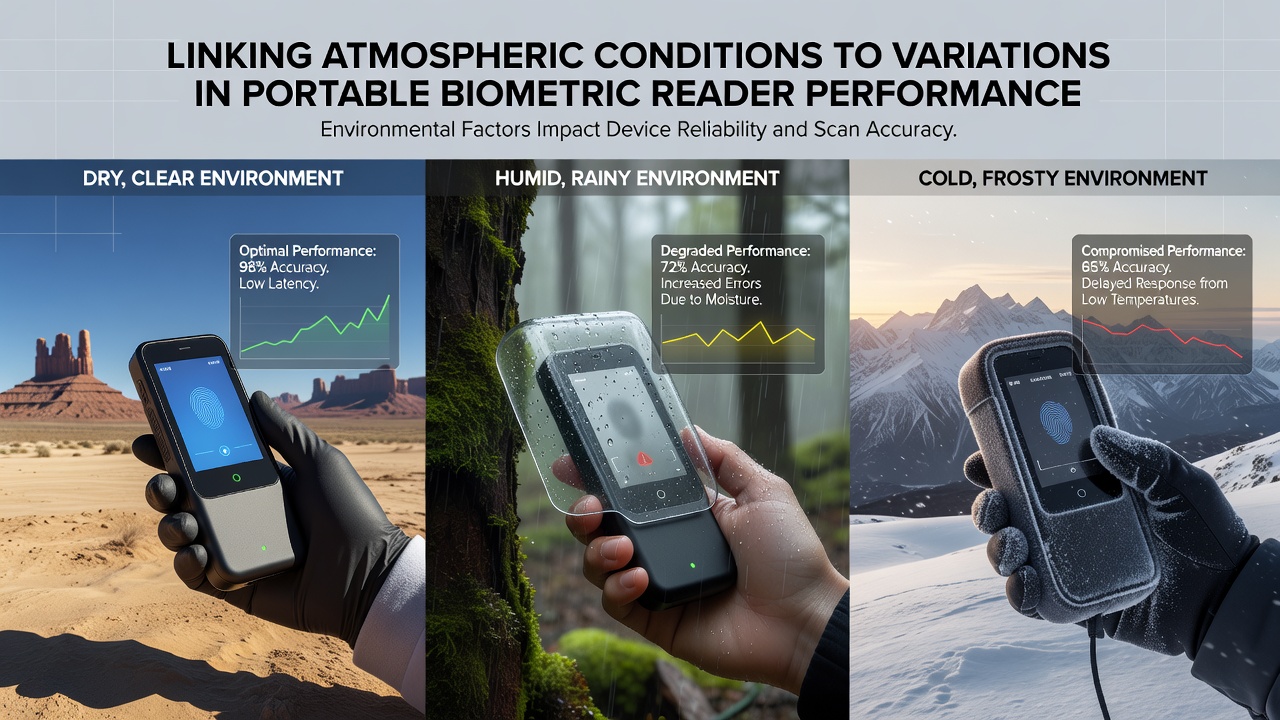
Electronic components inside portable readers respond to temperature fluctuations because semiconductor junctions alter resistance and optical emitters adjust output intensity. Studies conducted by teams at the National Oceanic and Atmospheric Administration laboratories indicate that optical heart-rate sensors can register deviations of up to three beats per minute when ambient temperatures move from 15 °C to 35 °C, even when the wearer remains at rest. Battery voltage also drops in colder conditions, shortening sampling intervals and introducing gaps in continuous recordings. Researchers calibrate compensation algorithms using onboard thermistors, yet residual error persists when rapid temperature swings exceed the correction range.
Humidity Effects on Electrode and Optical Interfaces
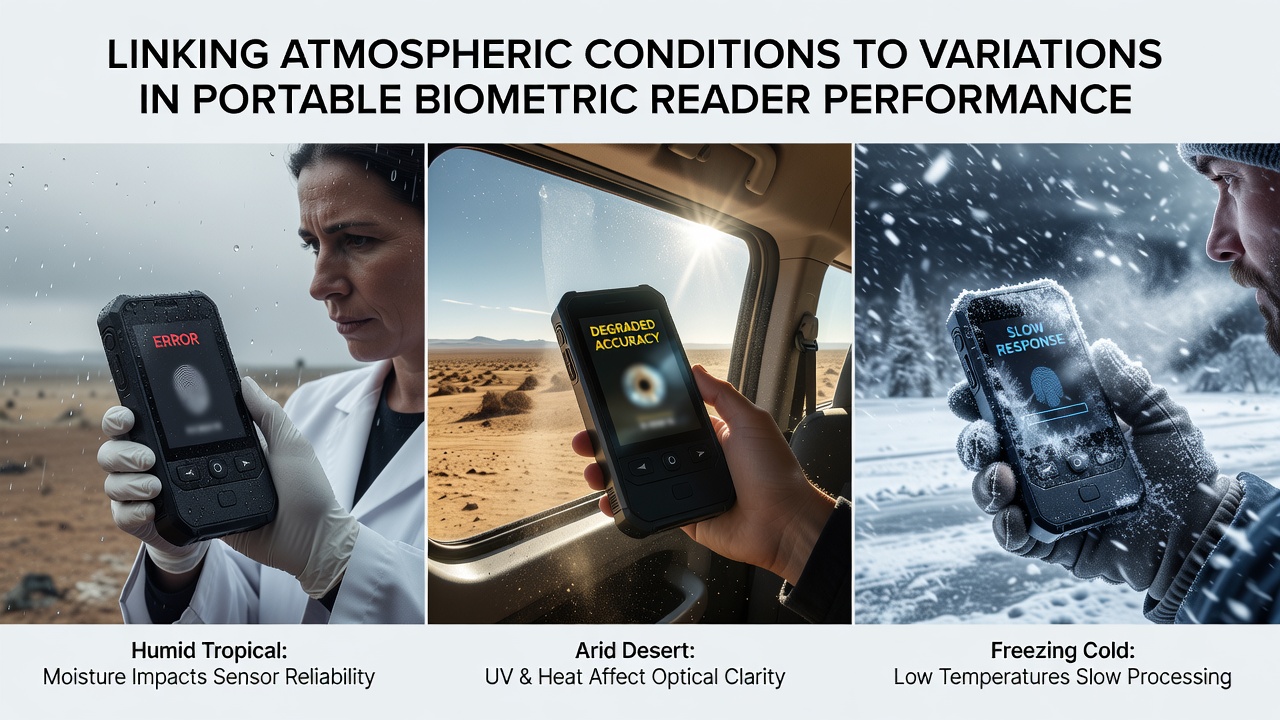
Moisture in the air changes skin conductivity and can form condensation on optical windows or electrode surfaces. Data collected across multiple climate zones reveal that relative humidity above 80 percent correlates with increased noise in galvanic skin response channels and reduced signal-to-noise ratios in photoplethysmography readings. In September 2026, monitoring stations operated by Environment and Climate Change Canada reported elevated error rates in wrist-worn devices during prolonged high-humidity periods along coastal transects, prompting firmware updates that adjust light intensity thresholds automatically. Protective coatings and hydrophobic membranes mitigate some effects, although prolonged exposure still requires periodic recalibration to maintain baseline performance.
Barometric Pressure, Altitude, and Gas Exchange Readings
Changes in atmospheric pressure affect partial pressure of oxygen and therefore pulse oximetry values. Portable units carried from sea level to 2,500 meters often display SpO2 readings 2–4 percentage points lower than sea-level baselines even when arterial saturation remains constant, because the devices apply fixed calibration curves. Australian Bureau of Meteorology field teams documented these offsets during high-country expeditions and shared datasets that allow manufacturers to incorporate pressure sensors for dynamic adjustment. Rapid ascents or descents further complicate readings because tissue perfusion and sensor contact pressure vary simultaneously with the atmospheric shift.
Combined Environmental Stressors in Field Conditions
Real deployments rarely isolate single variables. Observers note that high temperature paired with elevated humidity accelerates both battery drain and optical drift, while low pressure at altitude compounds the issue by reducing available oxygen reference points. Multi-week trials organized by the European Space Agency’s terrestrial analogue program recorded cumulative error growth when all three factors moved together, leading developers to integrate multi-sensor fusion that cross-checks temperature, pressure, and humidity inputs before finalizing each biometric estimate. The approach reduces but does not eliminate variance under extreme combinations such as desert midday heat followed by rapid high-altitude cooling.
Calibration Protocols and Standards Development
Standards organizations have begun specifying test sequences that expose devices to defined atmospheric profiles. The International Organization for Standardization working group on wearable health devices released updated guidance in late 2025 that includes temperature cycling between −10 °C and 50 °C alongside humidity steps from 20 percent to 95 percent. Manufacturers now embed lookup tables derived from these profiles, allowing portable readers to apply corrections within stated uncertainty bounds. Independent verification laboratories in Canada and Japan continue to publish comparative results that help users select models suited to particular climate regimes.
Conclusion
Atmospheric conditions produce documented, repeatable effects on portable biometric reader outputs through direct influence on electronics, optics, and physiological references. Temperature alters component behavior and power delivery, humidity modifies contact interfaces, and pressure shifts gas-exchange calculations. Field data gathered through 2026 confirm that integrated environmental sensing combined with updated calibration tables narrows performance gaps, yet complete immunity remains unattainable. Continued collection of region-specific datasets supports ongoing refinement of correction methods across diverse operating environments.