Jonas Vogel · 29 October 2026
UK Public Sentiment Surveys Reveal Patterns in Biometric Data Exchange Preferences for Emerging Sensor Networks
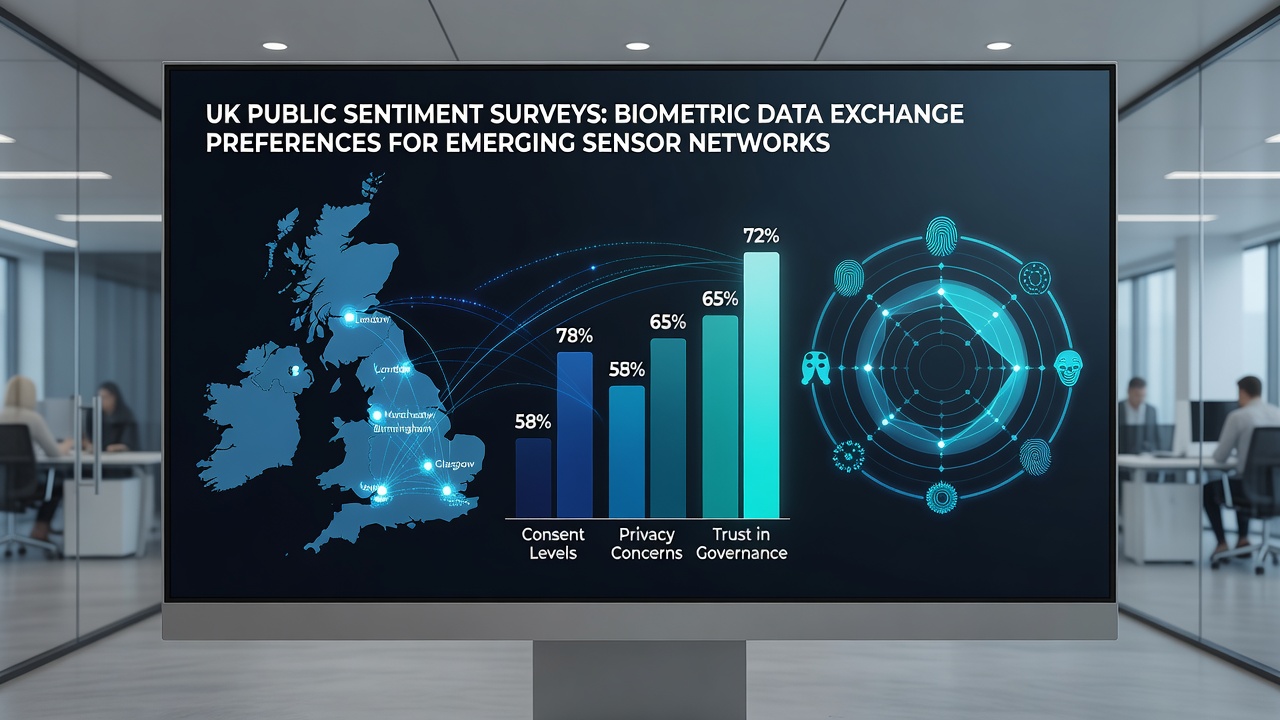
Recent surveys conducted across the United Kingdom have mapped out distinct patterns in how members of the public approach the exchange of biometric information with developing sensor networks, and these findings come from structured data collection efforts that ran through the first half of 2026 before wider release in October 2026. Researchers compiled responses from thousands of participants who answered questions on willingness to share physiological signals, facial recognition outputs, and movement metrics with systems designed for health monitoring, urban planning, and workplace safety applications, while the results highlight clear divides based on data type and intended use rather than blanket acceptance or rejection. Survey instruments focused on emerging sensor networks that combine wearable devices, fixed environmental readers, and interconnected processing hubs capable of real-time interpretation, and participants rated scenarios involving continuous heart rate transmission, gait analysis for security checkpoints, and aggregated crowd density measurements derived from biometric markers. Data indicates higher comfort levels when information flows toward medical research repositories compared with commercial advertising platforms, yet even within health contexts preferences shift depending on whether the recipient is a national health service database or a private technology firm operating under contract.Demographic and Contextual Variations in Responses
Breakdowns by age group show that individuals aged 18 to 34 expressed greater openness to sharing location-linked biometric streams with municipal sensor arrays for traffic optimisation purposes, whereas those over 55 registered stronger reservations unless explicit opt-in mechanisms and deletion timelines were guaranteed in advance. Regional differences also surfaced, with respondents in densely populated urban centres reporting more familiarity with sensor deployments already present in public spaces, while rural participants cited lower exposure yet similar underlying concerns about long-term storage and secondary access by third parties.
Income brackets correlated with attitudes toward compensation models, as higher-earning groups more frequently requested financial or service-based incentives for ongoing data contributions, and lower-income cohorts placed greater emphasis on community benefit assurances such as improved local healthcare access derived from collective datasets. Education levels influenced comprehension of technical safeguards, with university-educated participants demonstrating stronger recognition of encryption standards and anonymisation techniques described in survey prompts.
Preferred Data Exchange Mechanisms
Participants consistently favoured granular consent interfaces that allow selection of specific data categories rather than all-or-nothing agreements, and many indicated support for time-limited sharing windows that automatically expire after project completion. When presented with examples of sensor networks processing voice biometrics for emotion detection in smart environments, respondents showed marked preference for on-device processing that minimises raw data transmission to central servers, and this pattern held across multiple question formats testing trust in different architectural approaches.
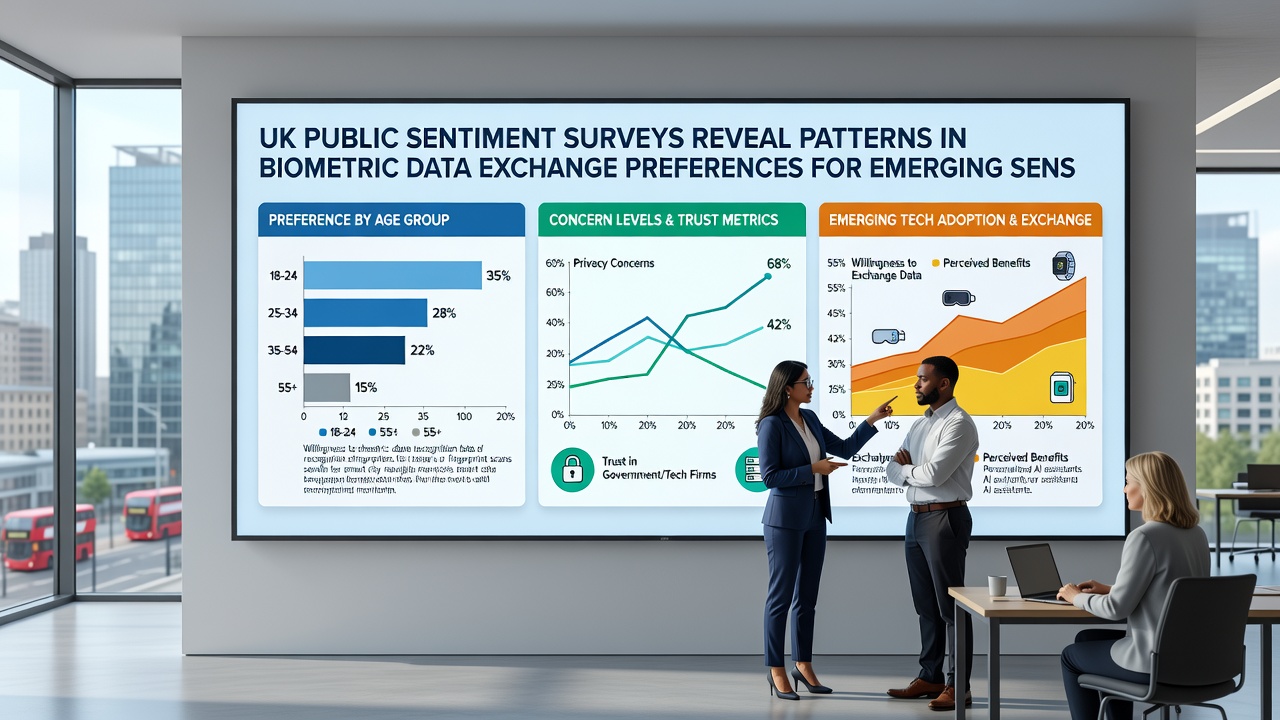
Security applications drew the most conditional responses, with clear majorities accepting biometric exchange for verified identity checks at transport hubs provided independent oversight bodies review access logs, yet the same groups rejected similar data flows when the end user was described as a private security contractor without public accountability structures. Health-related sensor networks received broader endorsement overall, particularly when outputs fed directly into personalised treatment recommendations rather than population-level statistics alone.
Emerging Trends in Sensor Network Adoption
October 2026 releases of these survey series coincide with expanded pilot programmes for compact sensing hardware in several UK cities, and the alignment allows planners to incorporate public preference data into deployment designs from the outset. Evidence from parallel studies conducted by international bodies such as the Australian Bureau of Statistics reveals comparable segmentation in attitudes toward biometric contributions, suggesting that core patterns transcend single-nation boundaries even while local regulatory frameworks shape specific expectations around data portability and revocation rights.
Further analysis of open response sections shows recurring mentions of past experiences with data breaches as influential factors, and those who recalled incidents involving unauthorised access to personal records demonstrated systematically lower willingness scores across all sensor network scenarios. At the same time, individuals reporting prior positive interactions with wearable fitness trackers displayed elevated comfort with continuous monitoring arrangements when clear boundaries separated commercial and clinical uses.
Conclusion
The accumulated survey evidence supplies planners and technology developers with measurable benchmarks for designing sensor networks that align with expressed public boundaries, and ongoing data collection cycles scheduled for 2027 will track whether implemented safeguards produce measurable shifts in those same preference distributions. Cross-referencing with reports from Statistics Canada continues to underscore the value of region-specific calibration even when underlying demographic patterns display broad similarities.